



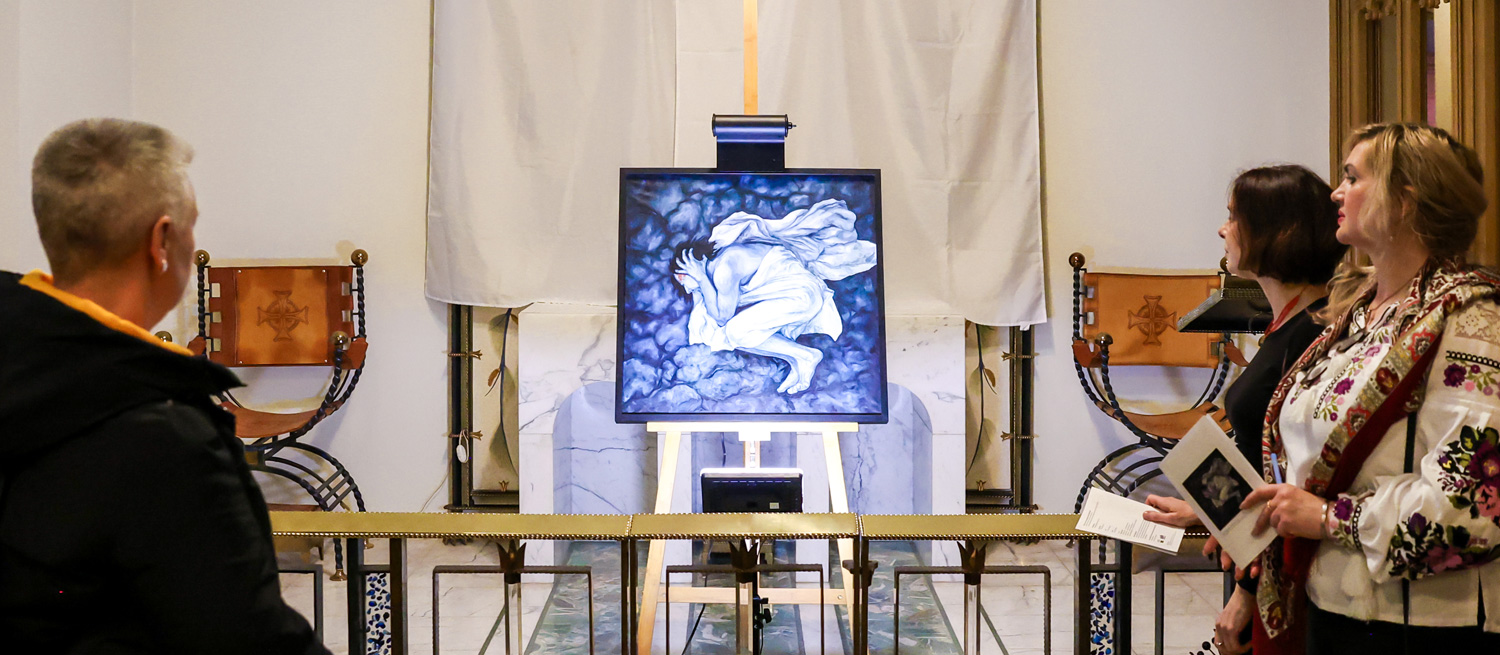
In recent years, people in the West have felt confused and have had to rethink the role of Christianity and the church in society. We have seen ultra-right movements (such as those observed in our southern neighbors) that represent themselves as Christian while performing very questionable actions. As a reaction, others conclude that these actions are what Christianity is and are ready to blame the faith for all that is wrong. I believe the ideas and statements raised by this exhibition offer an alternative explanation of what Christianity truly is, especially during challenging times.
Our world’s fate has fallen into the hands of people with no morals or empathy. This has happened before, but now we see it more closely because of media technology, and it is very disturbing. This brings anxious thoughts to many of us. It is better not to stay alone with our fears, but to discuss them with others and listen to those who have come through the very things we are afraid of. I hope this art will bring a vision of humanity and faith that remains alive even in very dark times.
Regarding the artworks: all four artists—Osyp Sorokhtei, Otto Pankok, Danylo Movchan, and Katia Lisova—speak about the difficult events that happened in their lifetimes1. This is what unites these works: the artist reflecting on human suffering in times of adversity.
What is different is the approach: Pankok and Sorokhtei, who worked between the First and Second World Wars, represent their stories from a humanistic point of view. They show Christ in His suffering as a human being2, and they depict those who were marginalized in those days as characters in the Gospel stories. Their narratives are about ordinary, weak, struggling people who deserve compassion. Their lives matter in Christ’s eyes, and must matter in ours.
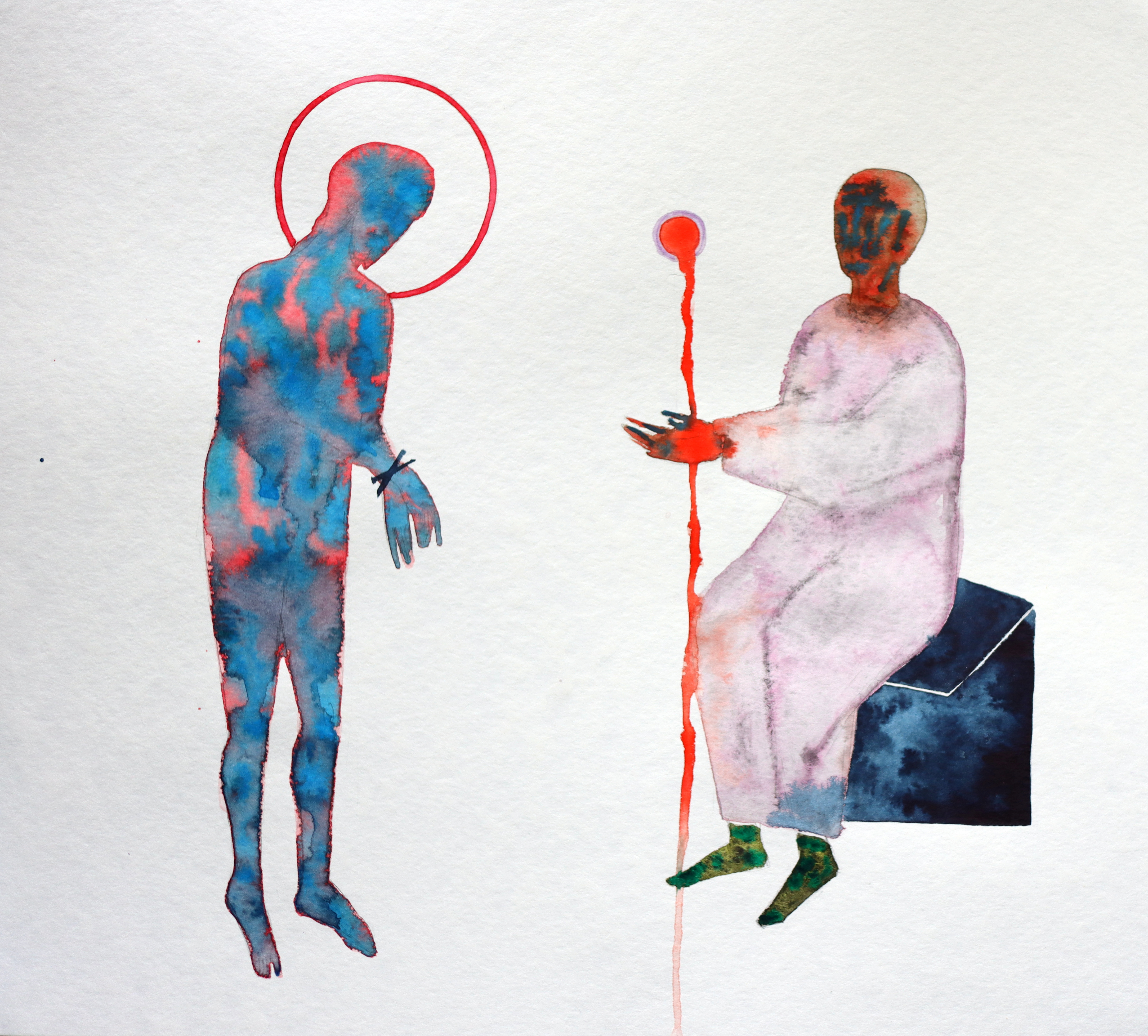
In the works of Katia and Danylo, who are modern Ukrainian artists, we see similar parallels between distressed people and the Passion of Christ3. Through the symbols and language of iconography, their works focus on God's presence and revelation in dark times.
They present their view of the events in Ukraine as a spiritual battle where ordinary people encounter real evil. I remember a conversation with a Canadian writer who told me, "We Canadians don’t like it when someone tells us what is good and what is evil." But those in Ukraine who are witnesses to Russian crimes have the right to say it is real evil. The artists see these actions as pure "anti-Christ" movements; by torturing and murdering innocent people, animals, and nature, the Russians crucify God as the source of life. Movchan and Lisova reflect the reality and the challenge that ordinary people in Ukraine face: their right choice may cost them their lives, yet it is still the path of love.

It might be challenging to accept this idea in a country where pacifism is often understood as a core part of true spirituality. That is why a collage of a soldier with the eyes of an icon may be seen as contradictory. Unfortunately, not all countries have the good fortune to remain pacifists. Many of my friends, who are Christians, are on the frontline. They joined the army because they are Christians.
Their motivation is far from naive, romanticized ideas of being heroes. They understand the risks of being killed or, worse, being captured by the Russians. But they took up weapons to fight for their families. They know that if they don’t fight to stop this evil, then it will spread and seize the whole country, and move even further. That is why Ukrainians these days call Russia “Mordor” and feel themselves to be citizens of Gondor, at the edge of the darkness. That is why my friends are at the frontline, taking Christ's words literally: "Greater love has no one than this: to lay down one's life for one's friends."
1, 2, 3. Sobkovych, Olga. The Passion of Christ in Times of Adversity. Exhibition brochure. Toronto: Timothy Eaton Memorial Church, 2026. P. 3, 6, 8.